Coastal Deck Railing Ideas USA: Design & Corrosion Guide
Designing elevated outdoor deck perimeters along American coastal zones requires balancing structural safety, building code compliance, view preservation, and aggressive environmental durability. Coastal Deck Railing Ideas USA. Marine exposures subject perimeter guardrails to constant salt fog, high humidity, intense solar radiation, and severe hurricane wind pressures.
Standard inland decking materials fail rapidly when installed along oceanfront properties. Low-grade carbon steel fasteners shear under corrosion stress, softwoods rot from trapped salt moisture, and basic powder coatings blister when exposed to airborne chlorides. Selecting perimeter guardrails for marine environments demands careful material chemistry selection, structural blocking, and specialized mounting hardware.
Architects, marine contractors, and coastal homeowners must evaluate perimeter options beyond surface aesthetics. Long-term performance relies on choosing marine-grade alloys, calculating wind pressure loads, maintaining structural post anchorage, and isolating dissimilar metals to stop galvanic reactions.
Understanding “coastal deck railing ideas usa”
Environmental Stressors along American Shorelines
Evaluating coastal deck railing ideas usa requires analyzing how aggressive marine environments attack outdoor structural components. Oceanfront properties face relentless airborne sodium chloride, high relative humidity, and constant temperature swings that accelerate corrosion.
Salt deposits pull atmospheric moisture onto metal surfaces, forming electrolytic films that drive severe oxidation. Material selection must account for these chemical pressures to prevent rapid structural breakdown.
Architectural Harmonization and Landscape Transparency
Coastal homes often feature expansive windows and elevated decks designed to capture panoramic water views. Thick, solid railing profiles create visual barriers that cut off natural landscapes and reduce outdoor living appeal.
Modern marine architecture balances structural strength with high sightline transparency. Specifying slim-profile post extrusions, horizontal tension cables, or tempered structural glass panels preserves open horizon views while satisfying strict building safety codes.
Building Code Standards in Coastal Jurisdictions
Municipalities along Atlantic, Gulf, and Pacific shorelines enforce strict structural loading rules for elevated guardrails. Building codes mandate that top handrails withstand a 200-pound concentrated force while infill spacing prevents a 4-inch sphere from passing through.
Coastal zones subject to high-wind velocity regulations impose additional lateral pressure requirements on solid glass panels and privacy screens. Engineering perimeter assemblies to handle storm winds requires heavy internal joist blocking and structural through-bolting.
Evolution of Marine Architecture and Deck Guardrail Systems
Historical Softwood Carpentry and Salt Decay
Early American oceanfront homes relied on site-cut softwoods like Atlantic white cedar, cypress, and pressure-treated pine for deck perimeters. Builders crafted heavy timber posts, top rails, and square vertical pickets using standard carpenter joinery.
Unsealed softwoods absorbed airborne salt water continuously, causing pickets to check, cup, and split within a few seasons. Iron nails corroded inside wet wood, producing unsightly rust stains and loosening post connections under moderate lateral push forces.
Mid-Century Synthetic Alternatives and Marine Limitations
The mid-twentieth century brought manufactured vinyl sleeves and early composite extrusions designed to eliminate constant painting and sealing. Polymer coatings protected internal core materials from direct moisture absorption and surface rot.
However, early synthetic formulations degraded rapidly under intense coastal ultraviolet light. Unstabilized plastics turned brittle, yellowed, and cracked under cold winter winds, while heavy solid sleeves restricted open water sightlines.
Contemporary Marine Metallurgy and Structural Glass
Modern coastal architecture uses advanced metallurgical alloys and structural glass engineering to create durable, highly transparent guardrails. Marine-grade 316 stainless steel, marine anodized aluminum, and laminated safety glass are now standard in high-exposure projects.
Current manufacturing methods produce factory-engineered modular panels that resist extreme environmental conditions. Structural posts now handle high structural tension and wind loads without requiring heavy visual profiles.
Analytical Frameworks for Marine Environment Specification
The Marine Microclimate Atmospheric Exposure Matrix
Atmospheric corrosivity varies significantly based on direct distance from the ocean shoreline, prevailing wind direction, and elevation above high tide.
Direct oceanfront locations require 316-grade stainless steel, thick structural glass, or marine anodized aluminum. Moving inland allows for high-performance powder-coated aluminum or engineered composites.
Material Life-Cycle Cost Projection Model
Evaluating coastal material investments requires factoring upfront purchasing costs against ongoing maintenance expenditures and replacement lifespans.
Low-cost softwood railings require continuous sealing and panel replacements in marine environments. High-grade aluminum or stainless cable systems demand larger initial capital investments but eliminate regular replacement cycles over decades.
Continuous Structural Load Transfer Model
Wind forces applied to solid perimeter panels transfer concentrated leverage through vertical posts into internal rim joists. Continuous handrails distribute these structural loads across neighboring support posts.
Continuous top cap channels minimize structural strain on individual base plates, keeping posts upright and preventing rim joist twisting during major storms.
Comprehensive Material Categories, Metallurgical Physics, and Trade-Offs
Marine-Grade 316 Stainless Steel Cable Assemblies
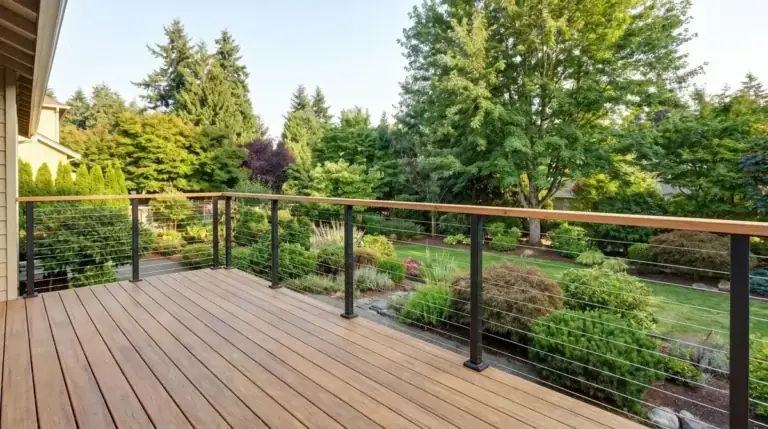
Horizontal cable infill systems use thin 316-grade stainless steel wire threaded through rigid metal or timber posts. Stainless steel containing molybdenum resists pitting and crevice corrosion caused by airborne chlorides.
Cable arrays provide excellent view transparency, giving elevated decks a clean architectural look. However, tensioned cables require heavy end posts and solid internal blocking to resist cumulative pull forces.
Marine Anodized Powder-Coated Aluminum Systems
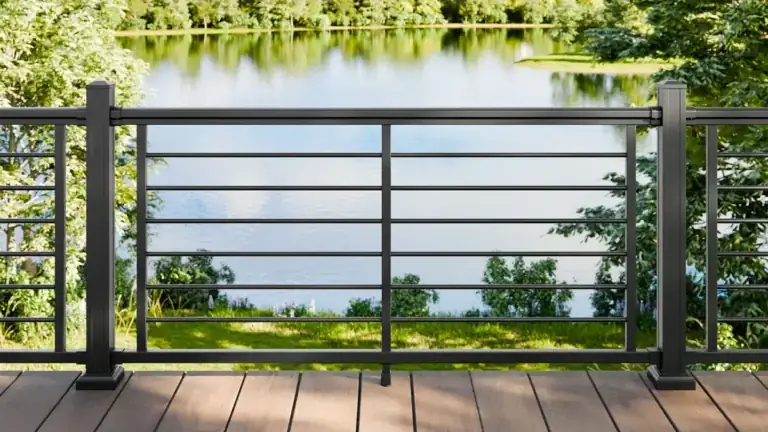
Pre-engineered aluminum railing systems combine lightweight structural strength, corrosion resistance, and crisp architectural lines. Anodized pretreatments paired with architectural powder coatings protect aluminum extrusions from salt oxidation.
Modular aluminum panels drop easily into pre-punched post tracks, reducing job-site installation hours. Aluminum carries higher upfront costs than raw softwoods, but eliminates routine painting and surface refinishing.
Structural Tempered and Laminated Glass Panels
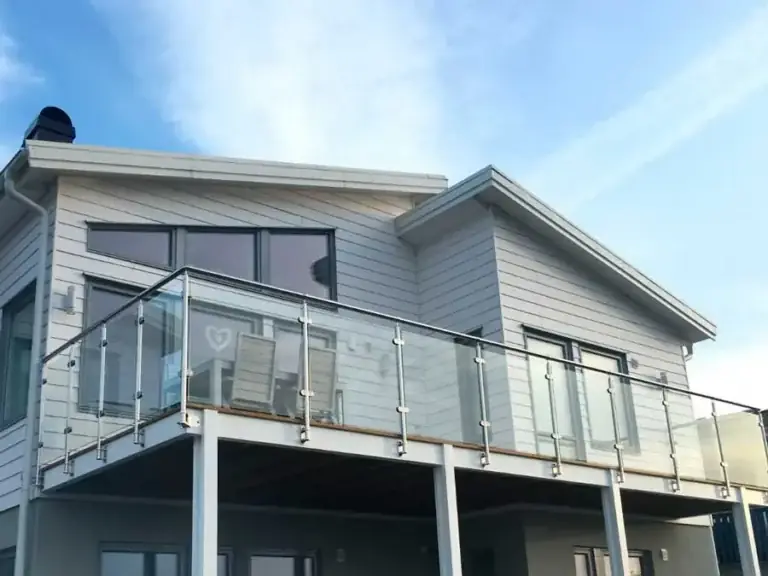
Frameless glass panels mounted into continuous base shoes deliver complete wind protection while preserving uninterrupted ocean views. Solid glass blocks cold sea breezes, making outdoor spaces comfortable during cool coastal months.
However, solid glass panels catch high storm winds, transferring large leverage loads into primary deck framing. Glass surfaces also collect salt residue, requiring regular fresh water washdowns to maintain view clarity.
Engineered Synthetic Composites with Metal Balusters
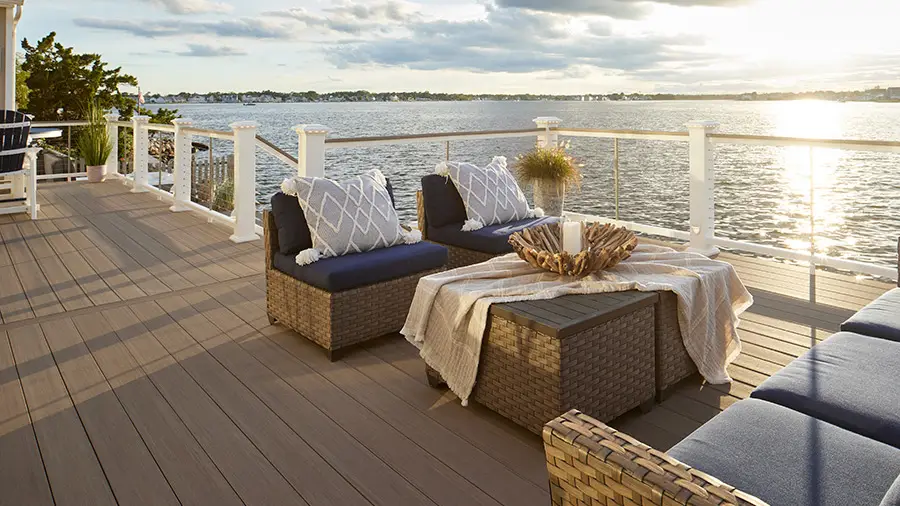
Composite guardrails feature heavy polymer sleeves fitted over internal structural steel or aluminum post mounts. Pairing composite posts with slim powder-coated metal balusters creates a classic architectural look with low maintenance needs.
Synthetic composite parts resist moisture absorption, rot, and marine wood-boring insects. Their heavy weight increases shipping and handling costs, though they perform reliably in moderate coastal environments.
Tropical Hardwood Guardrail Assemblies
Dense tropical hardwoods like Ipe, Cumaru, and Garapa contain natural oils and high timber density that resist salt absorption, decay, and insect attack. Custom carpenters craft top rails and post caps from these woods for high-end coastal homes.
Hardwood railings require heavy-duty carbide saw blades for field cutting and stainless steel screws for pre-drilled pilot holes. Unsealed hardwoods weather to a silver patina, while maintaining color requires regular application of penetrating oil finishes.
Marine Material Architectural Performance Matrix
| Railing Material System | Metallurgy / Core Profile | View Transparency Level | Corrosion Resistance | Upkeep Requirements | Expected Marine Lifespan |
| 316 Stainless Cable | Molybdenum steel wire | Excellent | Exceptional | Periodic retensioning | 25+ Years |
| Anodized Aluminum | Architectural aluminum alloy | Good | High | Fresh water washdown | 20 to 30 Years |
| Tempered Glass | Structural safety glass | Superior | Exceptional | Frequent glass cleaning | 20 to 30 Years |
| Engineered Composite | Polymer wood-flour matrix | Moderate | High | Light soap cleaning | 20 to 25 Years |
| Tropical Hardwood | Dense hardwood lumber | Moderate | Moderate to High | Seasonal oiling | 15 to 25 Years |
Decision Logic for Marine System Specification Coastal Deck Railing Ideas USA
Selecting structural perimeter systems requires matching material performance to property elevation, view priorities, and local coastal weather patterns.
Oceanfront High-Wind Bluff Location
-
Install structural laminated glass panels secured into heavy continuous aluminum base shoes to block ocean winds.
-
Through-bolt base channels into double rim joists supported by solid internal wood blocking.
Tidal Estuarine Bay Residence
-
Use horizontal 316 stainless steel cable arrays anchored into powder-coated aluminum posts to preserve water views.
-
Reinforce end posts with internal steel corner inserts to prevent post deflection under cable tension.
Moderate Inland Coastal Setting
-
Mount synthetic composite posts and handrails fitted with round aluminum balusters to match home trim details.
-
Select prefabricated drop-in panel sections to lower installation labor hours and speed up project completion.
Scenario-Based Implementation Across Coastal Topography Coastal Deck Railing Ideas USA
High Elevated Oceanfront Decks
Elevated multi-story oceanfront decks face strong wind shear forces and elevated fall hazards. Working on elevated platforms requires temporary safety scaffolding, which increases contractor installation costs.
Contractors lower labor expenses on high elevated decks by using lightweight modular aluminum panels that two-person crews can maneuver easily. Using standard prefabricated post base plates eliminates custom field welding.
Direct Salt Spray Dunes Platforms
Low-lying dune platforms positioned close to surf breaks endure constant salt spray, high humidity, and wind-blown sand. Sand abrasion wears away cheap painted finishes, exposing bare metal to rapid salt oxidation.
Specifying marine anodized aluminum extrusions or thick 316 stainless steel hardware prevents rapid metal degradation. Avoiding moving mechanical components keeps sand grit from jamming tensioning hardware.
Retrofitting Weathered Marine Timber Framing
Upgrading rotted wood railings on older coastal decks presents structural challenges. Aged rim joists often suffer from hidden moisture decay, requiring framing repairs before new mounting plates are installed.
Installers secure retrofitted posts by through-bolting mounting plates into newly added internal blocking using 316 stainless steel hardware. Swapping rotted wood pickets for stainless steel cables updates property style while maintaining solid post frames.
High-Velocity Hurricane Zones
Coastal properties located in high-velocity hurricane zones face intense lateral wind pressures and flying storm debris during severe weather events. Solid privacy screens or wide pickets catch wind force, creating extreme leverage on deck framing.
Specifying open horizontal cable arrays or removable glass panel assemblies allows storm winds to pass through freely. High-wind post spacing must be reduced to four feet on center to keep structural deflections minimal during severe storms.
Economic Calculations, Lifecycle Costs, and Marine Valuation
Direct Component Procurement Dynamics
Procuring marine-grade guardrail components requires sourcing specialized alloys, structural glass panels, tension fittings, base plates, and stainless fasteners. Ordering piecemeal hardware from multiple suppliers drives up material costs.
Buying complete factory-engineered rail packages or ordering components in bulk bundles lowers procurement expenses. Choosing standard factory colors like textured black or bronze avoids custom powder-coating fees.
Marine Labor Overhead and Installation Complexity
Contractor labor costs correlate with material weight, hardware piece counts, field joinery needs, and site accessibility. Custom-welded stainless steel arrays demand skilled trade labor over multiple work days.
Pre-engineered modular railing systems use drop-in panels and snap-in bracket channels, allowing crew members to complete perimeter installations quickly. Faster site assembly directly lowers overall labor expenditures.
Installed Cost Metrics per Linear Foot
| System Profile Category | Procurement Cost / Lin. Ft. | Installation Labor / Lin. Ft. | 5-Year Maintenance Cost | 20-Year Total Investment |
| 316 Stainless Cable | $70 to $130 | $45 to $85 | $10 to $20 | $125 to $235+ |
| Anodized Aluminum | $40 to $70 | $20 to $40 | $5 to $10 | $65 to $120 |
| Structural Glass | $130 to $240 | $80 to $150 | $5 to $15 | $215 to $405+ |
| Engineered Composite | $60 to $100 | $35 to $65 | $5 to $12 | $100 to $177 |
| Tropical Hardwood | $50 to $90 | $45 to $80 | $25 to $50 | $120 to $220 |
Specialty Installation Tools, Hardware, and Substructure Isolation
Specialty Marine Installation Tools
Equipping field installation crews with specialized tools speeds up job completion, reduces material waste, and ensures post connections meet structural safety codes.
-
Hydraulic Swagging Tools: Cold-compress 316 stainless steel end fittings onto tension cables, preventing wire pull-out under load.
-
Carbide-Tipped Miter Blades: Produce clean cuts on heavy aluminum extrusions and synthetic sleeves without melting finishes.
-
Calibrated Torque Wrenches: Drive post anchor bolts to exact tension limits, preventing thread stripping in structural wood blocking.
-
Precision Rotary Laser Levels: Establish level post heights across long deck runs, ensuring smooth top handrail alignment.
-
316 Stainless Steel Lag Bolts: Structural fasteners used with wide washers to anchor base plates firmly into internal wood blocking.
-
Neoprene Isolation Gaskets: Placed beneath metal base plates to prevent direct contact with treated wood, stopping galvanic reactions.
Streamlined Field Assembly Methods
Organizing clear job-site workflows minimizes installation errors and reduces billable labor hours.
-
Pre-Marking Post Mount Positions: Layout post spacing along the deck perimeter before drilling holes, keeping spans uniform.
-
Pre-Assembling Modular Panels: Fit balusters and bottom tracks together on deck boards before securing complete sections into post brackets.
-
Utilizing Drill Jigs: Drill bolt holes and cut structural wood blocking using custom job-site jigs to maintain consistent cut angles.
-
Batch Cutting Extrusions: Measure total rail runs and batch-cut top caps and bottom channels to maximize tool usage efficiency.
Taxonomy of Marine Risk Factors and Failure Vectors
Galvanic Corrosion Mechanisms
Mounting aluminum posts directly onto copper-treated framing using carbon steel bolts triggers rapid galvanic corrosion. Water containing salt acts as an active electrolyte between dissimilar metals.
Galvanic corrosion destroys bolt threads and blisters powder-coated post bases within a few seasons. Installing non-conductive neoprene isolation pads and using 316 stainless fasteners prevents chemical hardware degradation.
Substructure Attachment Mechanics
Securing vertical posts demands anchoring directly into internal substructure framing to resist lateral leverage forces:
-
Unblocked Rim Mounting: Post base plate is screwed through surface boards into an unblocked rim joist. Applied force pulls fasteners loose, twisting the rim joist and failing structural inspections.
-
Blocked Substructure Mounting: Post base plate is through-bolted into a double rim joist backed by solid internal wood blocking. Applied force transfers safely into main deck joists.
Unreinforced Rim Joist Failure
Anchoring perimeter posts to single rim joists without internal wood blocking is a major structural mistake in deck building. Posts screwed through surface boards flex easily under light lateral pressure.
Over time, leverage forces pull fasteners loose, twisting the outer rim joist and creating unstable guardrails. Fixing loose posts after decking is installed requires removing surface boards to add structural blocking.
Cable Tension Slackening and Post Bowing
Horizontal cable systems require continuous high wire tension to keep gaps under four inches. Installing cable hardware into light wood or unreinforced metal end posts causes support posts to bow inward.
Post deflection causes cable lines to sag, allowing gaps to exceed four-inch building safety codes. Corner and end posts must be reinforced with internal steel channels to maintain proper cable tension over time.
Long-Term Governance, Maintenance Protocols, and Material Preservation Coastal Deck Railing Ideas USA
Annual Structural Safety Audit Protocol
Maintaining coastal guardrail safety requires annual inspections to spot loose hardware, metal corrosion, or framing movement early.
-
Post Base Stability Inspection: Apply lateral force to vertical posts to detect base plate movement, loose bolts, or framing flex.
-
Fastener Integrity Check: Inspect visible mounting screws, bracket bolts, and tension fittings, retightening hardware loosened by frame settling.
-
Infill Clearance Verification: Measure gaps between balusters or cable lines to confirm spacing remains strictly under four inches under pressure.
-
Protective Finish Inspection: Check powder coatings and anodized finishes for chips, cracks, or salt bubbling around post bases.
-
Weep Hole Clearing: Ensure drainage weep holes at post bases remain free of sand and debris to prevent internal water freezing.
Seasonal Preventative Upkeep Routines
Simple seasonal maintenance protects guardrail finishes and extends overall system service life in harsh marine environments.
-
Fresh Water Washdown: Rinse metal posts, glass panels, and cable assemblies with fresh water quarterly to wash away salt deposits.
-
Hardware Servicing: Apply clear marine-grade anti-seize lubricant to stainless steel turnbuckle threads to prevent thread galling during adjustments.
-
Cable Line Retensioning: Tighten slack stainless steel cables using hand wrenches to keep wire arrays taut and code-compliant.
-
Coating Touch-Up: Seal minor powder coat scratches using manufacturer touch-up paint to prevent raw metal corrosion.
Field Evaluation, Quality Assurance Metrics, and Record-Keeping
Field Quality Inspection Matrix
Keeping clear maintenance records documents structural performance over time, providing proof of safety for building officials and property buyers.
-
Base Plate Fastener Torque: Confirm post anchor bolts meet recommended torque specs, ensuring zero post movement at joist connections.
-
Top Rail Lateral Deflection: Apply lateral force along top handrails, verifying structural sections resist bowing without permanent deflection.
-
Infill Clearance Inspection: Pass a four-inch sphere between balusters or cable strands under force to verify child safety compliance.
-
Cable Line Tension Measurement: Check wire tension using an inline tension gauge to confirm readings meet manufacturer targets.
-
Surface Finish Continuity: Inspect metal coatings for pinhole corrosion or bubbling, documenting areas needing touch-up sealant.
-
Galvanic Isolation Barrier Check: Confirm non-conductive gaskets remain present between aluminum plates and treated lumber framing.
Early Warning Indicators vs Structural Failure Signals
Catching early material wear prevents expensive structural repairs or sudden guardrail failures.
-
Leading Indicators (Early Warning Signs): Light tea-staining on stainless cables, minor cable line slack, tiny chips in post powder coating, and light surface oxidation on fastener heads. Resolving these issues early prevents structural decay.
-
Lagging Indicators (Advanced Failure Signs): Support posts leaning under light hand pressure, sheared anchor bolts, glass panels slipping out of channels, and twisted rim joists. These red flags demand immediate structural repair or full panel replacement.
Widespread Architectural Misconceptions and Engineering Fallacies
Low Upfront Softwood Savings Fallacy
Selecting cheap pressure-treated wood pickets seems like an economical way to build a coastal deck perimeter. However, continuous staining expenses, frequent board replacements, and high labor costs make softwoods more expensive overall than modular aluminum kits over a ten-year period.
Surface Board Base Plate Mounting Myth
Many DIY builders assume screwing post base plates directly into surface decking boards provides adequate structural strength. Surface deck boards lack the shear strength to resist top rail leverage forces. Structural post mounting requires through-bolting directly into double rim joists and internal blocking.
Zero-Maintenance Cable Array Assumption
Horizontal cable systems are often marketed as maintenance-free once installed. However, stainless steel wire strands stretch slightly over time, requiring periodic manual retensioning to keep gaps under four inches.
Over-Engineering Post Density Myth
Installing support posts every three to four feet makes guardrails stronger, but spacing posts far closer than code requires wastes money on extra post kits and mounting hardware. Standard modular systems achieve code compliance at six-foot to eight-foot spans when backed by solid internal joist blocking.
Ecological Impact, Marine Microplastics, and Life Cycle Assessment Coastal Deck Railing Ideas USA
Material Environmental Impact Assessment
Evaluating perimeter systems involves assessing their environmental footprint across their production life, usage period, and eventual disposal.
-
Sustainably Harvested Hardwoods: Certified tropical hardwoods carry low initial manufacturing energy footprints. However, slow timber growth rates require responsible forestry management to prevent tropical deforestation.
-
Recycled Architectural Aluminum: Primary aluminum production requires high energy inputs, but recycling aluminum uses 95% less energy. Specifying recycled aluminum extrusions lowers environmental impact while keeping components fully recyclable.
-
Synthetic Composite Processing: Composite systems use recycled plastics and reclaimed wood flour, keeping waste out of municipal landfills. However, mixed synthetic materials are difficult to recycle at the end of their service life.
Marine Life Protection and Safety Standards
Architects, building contractors, and coastal homeowners share a responsibility to install perimeter guardrails that prioritize user safety and environmental protection. Omitting internal post blocking, using non-compliant baluster spacing, or choosing low-grade hardware creates serious fall hazards along elevated platforms. Following proper structural engineering guidelines ensures coastal outdoor spaces remain safe, functional, and visually appealing for decades.
Strategic Engineering Synthesis and Material Verdict
Identifying high-performance coastal deck railing ideas usa options requires balancing property architecture, ocean view preservation, structural post spacing, marine corrosion resistance, and long-term maintenance budgets. Treating deck perimeters as engineered structural safety barriers ensures reliable performance without overspending on unnecessary components.
Specifying marine-grade anodized aluminum panels or 316 stainless steel cable arrays provides an ideal balance of durability, sightline transparency, and low upkeep across most American coastal environments. Structural glass panels deliver superior wind protection and open views, but demand higher upfront capital and heavy substructure blocking.
By installing solid internal joist blocking, using 316 stainless steel fasteners with neoprene isolation gaskets, matching material chemistry to salt spray exposure, and completing annual safety audits, property owners can construct beautiful, code-compliant deck guardrails that withstand harsh marine environments for decades.